

- The World Health Organization (WHO) recently reported that almost half of the world’s population with hypertension isn’t aware they have the condition.
- The organization has urged countries to adopt better practices for hypertension education, estimating that the proposed practices could prevent 76 million deaths between 2023 and 2050.
- Experts recommend patients get their blood pressure regularly checked from the time they’re 18 years old.
Almost 50% of people with hypertension are unaware they have it, according to a new report from the World Health Organization (WHO).
Yet, according to a new WHO report, most people have no idea they are living with this “silent killer.”
With that in mind, the WHO is urging countries to better educate their populations about the risks of high blood pressure. Through early screenings, treatments, and educational efforts, the organization has challenged countries to aim for having controlled blood pressure in 50% of their citizens.
Here’s how hypertension can make such a big impact, why people are unaware they have the condition, and how to best manage hypertension.
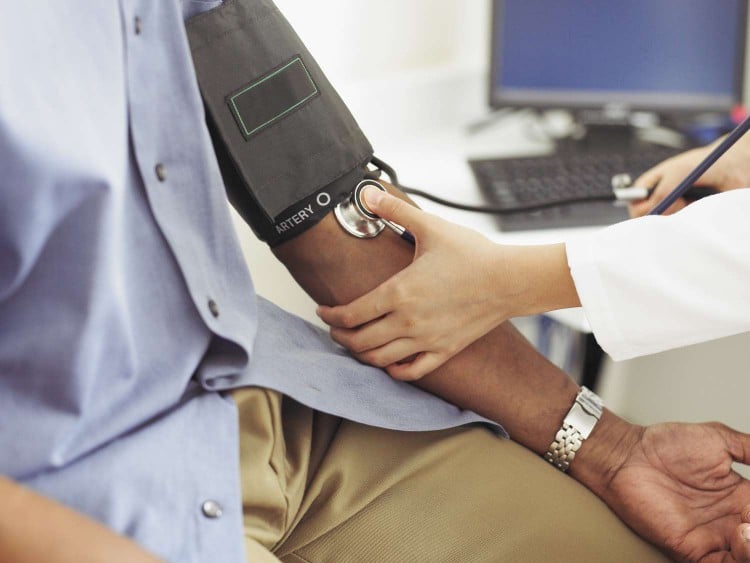
Getty Images / Siri Stafford
What Is Hypertension—And Why Does It Matter?
Your blood pressure is the pressure of blood pushing against the walls of your arteries. It is measured using two numbers—the systolic pressure (the first number) and the diastolic pressure (the second number).
Many health authorities, including the WHO, consider a reading of 140/90 mmHg to be hypertension (high blood pressure). But, the American College of Cardiology and the American Heart Association (AHA) consider 130/80 mmHg to be high blood pressure.
It’s best to talk to a healthcare provider to determine whether your readings are considered high based on your unique situation.
“Both readings [top and bottom number] are important,” Tejas A. Mehta, MD, an interventional cardiologist with OhioHealth told Health. “[There also] can be different goals for patients depending on other medical problems, such as diabetes, heart failure, vascular disease, and so on.”
A healthcare professional can diagnose hypertension by checking your blood pressure in the office, or, occasionally, by reviewing blood pressure measurements that you take at home, explained Natalie Bello, MD, MPH, director of Hypertension Research and associate professor of cardiology in the Smidt Heart Institute at Cedars-Sinai.
“In most cases, blood pressure needs to be higher than normal on more than two occasions to be diagnosed with hypertension,” she said.
Long-term complications related to untreated hypertension include heart failure, stroke, kidney failure, heart attacks, blindness, and sexual dysfunction, said Mehta.
Many times these issues are not reversible once they occur—even with blood pressure treatment—so finding the problem is the first step, he explained.
Most People Don't Know What a Normal or Healthy Blood Pressure Is, Study Shows
How People Can Have Hypertension and Not Know It
Hypertension is relatively asymptomatic—meaning it usually doesn’t cause many symptoms. This is why it is often called the silent killer, explained Mehta.
That said, once your blood pressure is obviously elevated, symptoms can begin to surface. Some of the warning signs can include headaches, blurry vision, loss of vision, and chest pain, he said.
“Sometimes people also can develop a crease in the earlobe or in the side of the forehead,” Prerna Gupta, MD, a cardiovascular disease physician and researcher at the University of Colorado told Health. “If you have persistently swollen ankles that don’t go away when you sleep, that’s another sign to see the doctor.”
But, for the most part, people cannot “feel” high blood pressure.
Instead, it usually develops gradually over months to years, often going unnoticed as the body adapts to it, explained Naval Parikh, MD, JD, a primary care physician, board-certified internist, and the chief of medicine of a Level 2 Trauma Center in South Florida.
But it can still cause harm to the heart, kidneys, brain, and other organs.
This damage occurs, because over time, when the heart has to work harder to pump blood, there can be damage to the body’s arteries which makes them less flexible, Bello explained.
“Uncontrolled high blood pressure can also cause problems for the arteries in your brain and has been linked to memory issues and dementia later in life,” she said.
Study Shows Blood Pressure May Be Higher, More Difficult to Control During Winter Months
Management and Treatment of Hypertension
Many people with high blood pressure can lower their numbers into a healthy range by making healthy lifestyle choices, Bello explained.
“Getting physical activity, eating a healthy diet, maintaining a healthy weight, getting enough sleep, managing stress, and quitting smoking are some of the ways blood pressure can be lowered without medication,” she said.
It’s also important to be aware of how much sodium you consume.
In fact, the AHA suggests no more than 2,300 mg of sodium per day for adults, and ideally no more than 1,500 mg per day for adults, especially those with high blood pressure. For people with higher sodium intake, even cutting back by 1,000 mg a day can improve blood pressure and heart health.
“Restaurant food also has a lot of salt, so reducing the times you eat out can help,” Gupta said.
She recommends patients try the DASH diet to help lower their blood pressure. That said, she still recommends patients be proactive with medication in circumstances that require it.
“I suggest to my patients that we should treat their blood pressure while waiting for their lifestyle to change,” she said. “It’d be great if it improves enough that we don’t need medication, but we don’t want to miss the opportunity to treat their blood pressure.”
For people who do need medication to help safely lower their blood pressure, Bello explained there are plenty of well-tolerated medications available. And, if one doesn’t work or is causing side effects, there are others to consider.
“The first step toward a healthier life, though, is getting your blood pressure checked and knowing your numbers,” she said.
WHO’s Proposal for Hypertension Education
According to the WHO, the most effective way to control these hypertension risk factors is through large-scale, population-level public health programs. In their recent report, they urged countries worldwide to implement steps to control blood pressure in at least 50% of their population.
To date, the WHO indicated that Canada, South Korea, and others have already achieved that goal. If every country met the goal, the organization predicts that these efforts could prevent 76 million deaths between 2023 and 2050.
You can be part of this movement for controlled blood pressure by getting your blood pressure checked regularly beginning at age 18, encouraged Parikh.
“The frequency of checks should be determined by your age and risk factors, such as family history, smoking, and weight,” he said. “You can have your blood pressure checked at your doctor’s office or at a pharmacy like CVS or Walgreens.”
How the Size of Your Blood Pressure Cuff Could Lead to Inaccurate Readings