
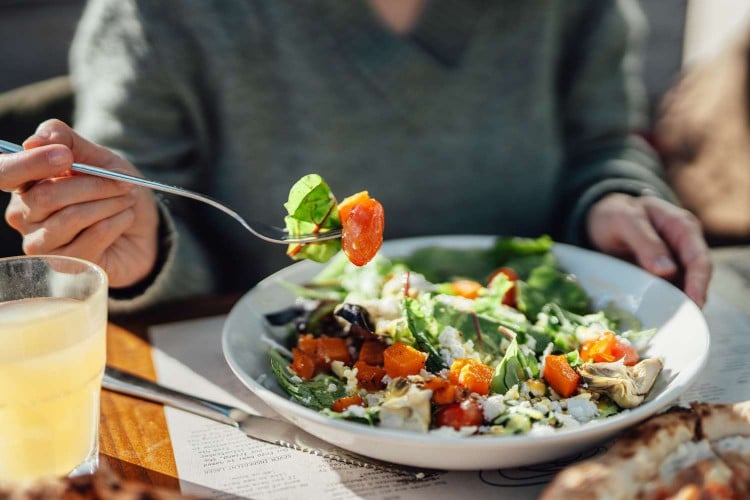
- New research found that eating a vegetarian diet may increase someone’s risk of a hip fracture.
- Researchers assume this is due to lower protein intake compared to other diet types.
- Experts recommend vegetarians prioritize quality protein in their diet in order to lower their risk of hip fracture.
Following a vegetarian diet may increase someone’s risk of experiencing a hip fracture, a new study finds.
There is no denying that following a vegetarian diet is linked to a variety of positive health outcomes, including protecting against certain cancers and cardiovascular diseases. However, new research points to a potential downside of following a plant-based eating pattern.
Based on an evaluation of over 400,000 adults, the new study published in BMC Medicine showed that both men and women who follow a vegetarian diet have a higher risk of hip fracture vs. those who include animal protein in their diet.
The new research raises the question: Is following a vegetarian diet too risky to adopt, or does following it simply require some precautionary steps to help keep your bone health in check?
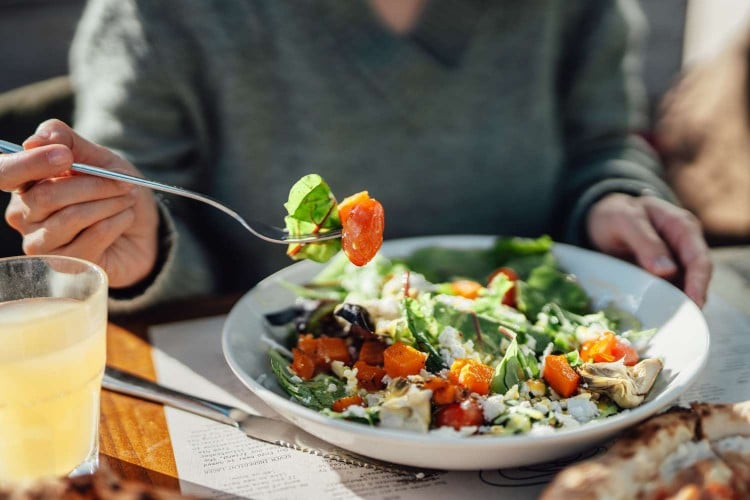
Getty Images / Oscar Wong
The Link Between Diet and Hip Fracture Risk
Hip fractures are painful experiences that can severely impact someone's quality of life.
Approximately 18% of women will experience a hip fracture over the course of their lifetime, compared to about 6% of men.
In order to lower the risk of hip fracture, it’s helpful to prioritize bone health. One of the easiest ways to do this is through diet.
To explore whether certain diets impact hip fracture risk, the new study evaluated over 400,000 people who were classified as either regular meat eater, occasional meat eater, pescatarian, or vegetarian, and determined how many in each group experienced a hip fracture.
Of the 413,914 participants involved, there were 3,503 hip fracture cases, equating to 0.8% of the sample group. Researchers found that both male and female vegetarians had a 50% greater risk of experiencing a hip fracture than regular meat-eaters.
“This 50% greater risk in vegetarians translated to 3 more hip fractures per 1000 people over 10 years,” said James Webster, BSc, MSc, a post-graduate researcher at the University of Leeds and investigator of the study.
The research team found no difference in hip fracture frequency among people who eat meat regularly and people who eat meat occasionally. Pescatarians had a slightly greater (non-significant) risk of experiencing a hip fracture than regular meat-eaters.
Why a Vegetarian Diet May Increase Hip Fracture Risk
There are a few proposed reasons why those who follow a vegetarian diet may have an elevated risk of fracturing a bone.
Vegetarians tend to have lower body mass index (BMI) than meat eaters. According to Webster, this lower BMI is part of the reason why higher hip fracture risk was observed, possibly because “some fat mass helps cushion bones during a fall, or because at a lower BMI, bone, and muscle health are more likely to be poor.”
“Other reasons [for this relationship] could include lower dietary protein intake and lower vitamin D levels, but further research is needed to confirm [this relationship],” he said.
In the new study, vegetarians consumed less dietary protein, iron, iodine, niacin, selenium, vitamin B12, and vitamin D than other diet groups. This group also did not meet the daily recommended intake of protein.
This suggests that not eating enough protein increases someone's likelihood of hip fracture. In turn, it could be argued that the opposite is also true—increasing protein consumption may help reduce the risk of hip fractures among vegetarians.
19 Best Vegetarian and Vegan Protein Sources
Supporting Bone Health While Following A Vegetarian Diet
Though the study suggests that following a vegetarian diet may increase the risk of experiencing a hip fracture, these results do not imply that people should avoid following this dietary pattern entirely.
Instead, the heightened risk of hip fracture should be weighed against the potential benefits a vegetarian diet offers.
“A vegetarian diet impacts many factors that affect bone health,” said Melissa Azzaro, RDN, LD, a registered dietitian in New Hampshire and author of A Balanced Approach to PCOS.
She advised that while “animal proteins certainly contribute nutrients important for bone health, vegetables, fruits, legumes, and grains are important as well, and diet is only part of the picture when it comes to the risk for fracture.”
Prunes for Bone Health
Prunes are a natural source of bone health-supporting nutrients that include boron, calcium, magnesium, vitamin K, and phenolic compounds.
Data shows that prunes may help prevent or delay bone loss in postmenopausal women, with some evidence showing that eating as little as 50 grams of prunes daily is linked to these positive effects.
Other data shows that the same 50-gram daily serving may positively affect bone turnover among men when the fruit is consumed every day for 3 months.
The Dietary Guidelines for Americans recommend vegetarians get three servings of dairy daily to help them consume enough calcium, protein, vitamin D, potassium, and magnesium, among many other bone health-supporting nutrients.
For people avoiding cow’s milk, soy milk is the only dairy milk alternative that is considered equivalent nutritionally and should be used as a plant-based “swap.” Leaning on other plant-based milk products can provide calcium and vitamin D, but they tend to be much lower in protein than dairy and soy-based products.
Depending on a person’s diet, taking a vitamin D, protein, or other nutritional supplement that helps fill nutritional gaps may be indicated. This approach should only be explored with a healthcare provider to ensure appropriate doses and forms are chosen.
While the new study suggests that those who avoid animal meat have a 50% greater risk of experiencing a hip fracture in their lifetime, that doesn’t mean vegetarians have to eat meat in order to lower their risk.