
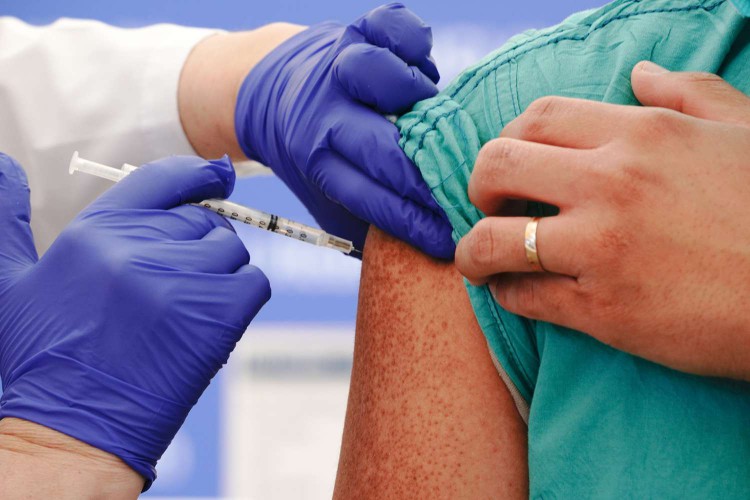
- The immune system immediately begins to mount a response after vaccination, but it takes about two weeks for the immune system to mount a full response.
- Any exposure re-ups the immune system slightly, even if you don’t get sick, but vaccination gives the body a better chance at fighting off infection in the future.
- Wait three to six months after a confirmed COVID infection to get vaccinated to get the most out of the vaccine.
The U.S. is in the thick of another COVID surge, and it’s likely that you’ll be exposed to the virus in the coming weeks if you haven’t been already.
That could be a problem for the large majority of people who have yet to receive the latest bivalent COVID vaccine—only about 19% of adults in the U.S. have opted to get the shot, according to the latest data from the Centers for Disease Control and Prevention (CDC).
Experts say that a close call with COVID can act as the motivation needed to schedule an appointment.
“There is no official guidance based on vaccination after coming into contact with someone who then was positive or is positive for COVID-19,” said Andrew Stanley Pekosz, PhD, a professor and vice chair of the W. Harry Feinstone Department of Molecular Microbiology & Immunology at the Johns Hopkins Bloomberg School of Public Health. “If you haven’t been boosted, maybe that exposure may be that trigger for you to actually go out and get that vaccine.”
Getty Images/Bloomberg Creative
Can You Get Vaccinated Immediately After a COVID Exposure?
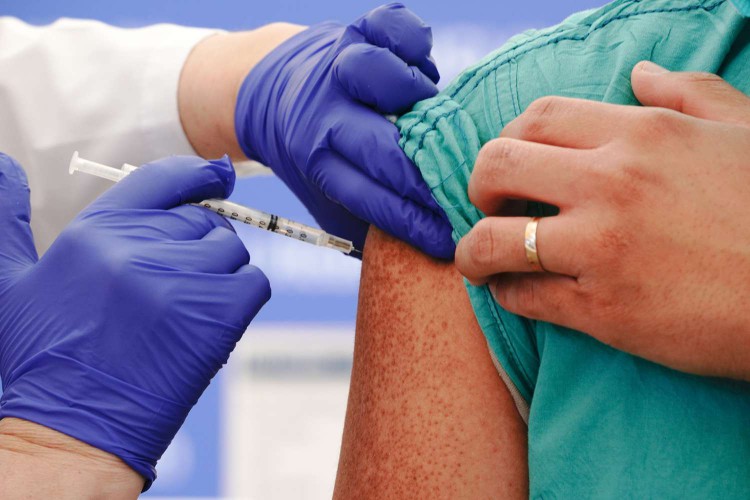
The COVID vaccines work by introducing a segment of protein, or proteins, to the immune system. The vaccines do not infect people with SARS-CoV-2, the virus that causes COVID, but rather help the immune system recognize future exposures.
For about two weeks after a person gets vaccinated, the immune system mounts a response, creating antibodies that recognize unique proteins and store that memory in the immune system. When that person encounters those proteins through a COVID exposure later on, those antibodies know to recognize the virus as an intruder and fight it off.
The body recognizes previous influenza infections, “but there are different types of variants now, so your body needs that exact response,” he said, noting that previous infection with older variants can cause the immune system to mount some response. However, that response will be much bigger with the latest vaccine, which teaches the immune system to recognize current variants.
If your body is already mounting a response to a COVID exposure, it may be a good idea to wait until you know you aren’t going to get sick. This period of time—from exposure to symptom onset—is known as the virus’s incubation period. For Omicron variants—which include the newest JN.1. subvariant—studies have estimated a 2–3 day incubation period.
Do not get vaccinated if you are testing positive for COVID. Not only will you risk exposing people to the illness, but your immune system will also be at capacity, meaning you won’t optimize the vaccine’s effects, Bracamonte said.
If you are testing negative and choose to get vaccinated right after an exposure, your immune system will begin mounting a response that may protect you from severe illness from this exposure, but it does take about two weeks for the immune system to mount a full response, Pekosz said.
“It will certainly protect you in the next two to three months from other exposures,” he said.
What Is JN.1? New COVID Variant May Become Dominant For Holiday Season in the US
I Was Exposed to COVID But Didn’t Get Sick—Why?
That must mean you’re immune to the virus, right? Unfortunately, not exactly, said Bracamonte.
There are many variables that influence whether a person gets sick, including their stress level, diet, underlying medical issues, the amount of time they were exposed to the virus and the amount of virus a person was shedding when another was exposed.
Each of these variables will be different during each exposure, and not getting infected after one exposure does not mean a person will not benefit from vaccination against future exposures, he said.
According to Bracamonte, people who have underlying medical conditions such as hypertension, obesity, or diabetes, people who are elderly, and those who smoke, should consider getting the latest vaccine if they haven’t done so.
For people who are young and healthy, “you must make that informed decision and have an honest conversation with your physician who you trust. This is unfortunately here to stay,” Bracamonte said.
Flu, COVID, and RSV Cases Are on the Rise, But Few Americans Are Vaccinated, CDC Warns
How Long After Having COVID Should You Wait to Be Vaccinated?
If you’ve recently had COVID, Bracamonte and Pekosz recommend waiting between three and six months to get vaccinated with the most updated COVID vaccine.
It isn’t dangerous to get vaccinated before then, but the idea is to maximize the benefits, and most people retain pretty strong immunity for three to six months after an infection.
“Your body is already at maximum in terms of responding to COVID,” Pekosz said, adding that waiting for a few months allows the immune system’s memory to wane before vaccination ramps it back up, extending protection.
If you haven’t gotten the latest bivalent vaccine—and you’ve managed to avoid COVID so far this year—“It’s not too late,” Pekosz told Health, noting that the latest vaccine can protect against the emerging JN.1 variant. “We expect COVID to be around for the winter season, so take this as a sign to go out and get vaccinated.”